










01. How to Care for and Clean a Handmade Moroccan Rug
Intro
A handmade Moroccan rug — whether it's a plush Beni Ourain, a flatwoven Boujad, or a vintage kilim — is a genuine investment piece, often taking weeks of skilled handwork to make. That craftsmanship is exactly why it deserves different care than a mass-produced synthetic rug; the wrong cleaning method can damage natural fibers, fade hand-dyed colors, or loosen hand-tied knots.
This guide covers what actually keeps a handmade Moroccan rug looking good for decades — daily upkeep, how to handle spills and stains, when (and how) to deep clean, and the mistakes that cause the most damage.
02. Step 1: Everyday Maintenance
Regular Vacuuming — Gently
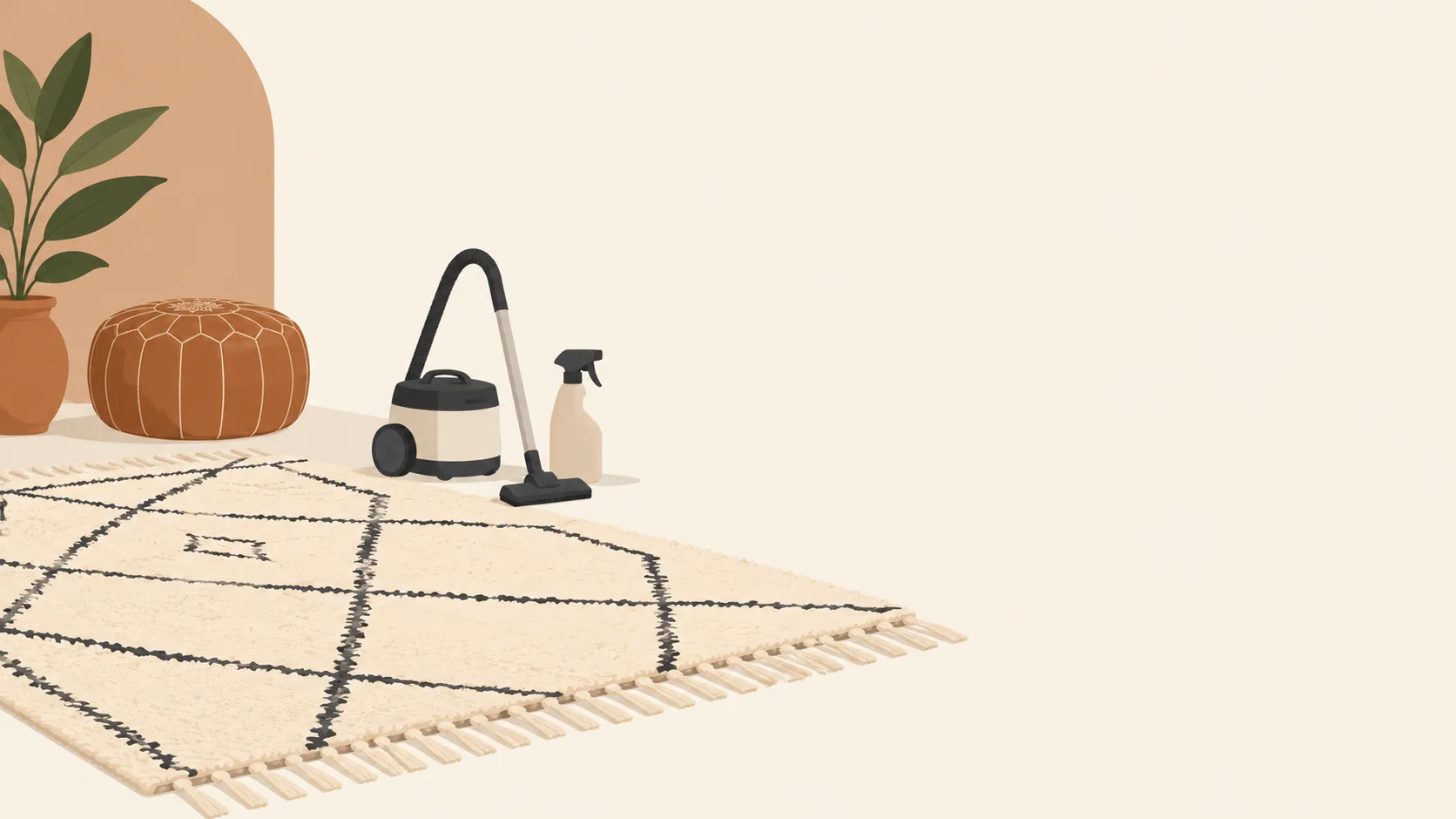
Regular vacuuming is the single most important habit for keeping a handmade rug clean, since it removes dust and grit before it works down into the fibers and wears them out from the inside. For wool rugs, use a vacuum without a rotating brush head (or switch the brush off), since aggressive brushing can pull at hand-tied knots and loosen the pile over time. A suction-only setting, once or twice a week, is enough for most households.
Rotate the Rug Periodically
Sunlight and foot traffic wear a rug unevenly if it's never moved. Rotating the rug 180 degrees every few months helps it fade and wear evenly, so one edge doesn't end up visibly lighter or more worn than the rest — a simple habit that meaningfully extends how good the rug looks over time.
Simple habits that add years to a rug's life
- Vacuum on suction-only mode, without a rotating brush
- Rotate the rug every 3–6 months for even wear
- Use a rug pad underneath to reduce friction and slipping
- Keep direct, prolonged sunlight off the rug where possible to prevent fading
03. Step 2: Handling Spills & Spot Cleaning
Act Fast, Blot — Don't Rub
The first few minutes after a spill matter most. Blot the area immediately with a clean, dry cloth to absorb as much liquid as possible, working from the outside of the spill inward so it doesn't spread further. Rubbing is the most common mistake here — it pushes the liquid deeper into the fibers and can distort the pile, making the stain harder to remove and leaving a visibly rough patch.
Spot Cleaning Solution for Wool
For most spills on a wool rug, a mild solution of cool water and a small amount of wool-safe or pH-neutral detergent works well. Apply it sparingly with a soft cloth, blot again, and let the area air dry fully before walking on it — wool holds moisture longer than synthetic fibers, so rushing this step can lead to a musty smell if the rug doesn't dry properly.
What to avoid when spot cleaning
- Rubbing the stain instead of blotting
- Using hot water, which can set some stains permanently
- Harsh chemical cleaners or bleach, which can strip natural wool dyes
- Soaking the area heavily, since excess moisture is hard to fully dry
04. Step 3: Deep Cleaning
How Often Deep Cleaning Is Actually Needed
A handmade wool rug generally needs a full deep clean only once every 1–2 years under normal household use, more often in high-traffic areas or homes with pets. Over-cleaning can be just as harmful as under-cleaning, since repeated deep cleans gradually wear down natural fibers and can fade hand-dyed colors faster than regular wear alone.
Professional Cleaning vs DIY
For a valuable handmade rug, professional cleaning by someone experienced specifically with natural-fiber and hand-knotted rugs is usually worth the cost — they know how to test colorfastness before treating the whole piece and use methods that won't damage the knots or backing. A full at-home deep clean is possible for smaller, less valuable rugs, but it carries real risk of shrinkage, color bleeding, or uneven drying if not done carefully.
Signs it's time for a deep clean
- Visible dullness that vacuuming and spot cleaning no longer fix
- A musty or trapped-odor smell, even after airing the rug out
- Ground-in dirt visible when you part the pile with your fingers
- It's been more than 1–2 years since the last deep clean
05. Common Mistakes to Avoid
What damages handmade rugs most
- Using a rotating-brush vacuum head on wool pile
- Rubbing spills instead of blotting them
- Deep cleaning far more often than necessary
- Leaving the rug fully soaked or drying in direct, intense sunlight
- Skipping a rug pad, which increases friction and slippage over time
06. Conclusion
A handmade Moroccan rug is built to last for decades when it's cared for properly — the key is consistent, gentle everyday habits rather than occasional aggressive cleaning. Vacuum regularly and gently, deal with spills immediately by blotting rather than rubbing, and save deep cleaning for when it's genuinely needed, ideally by a professional who understands natural fibers. Done right, the rug will only get more character over time, not less.