








01. How to Choose the Right Moroccan Pouf for Your Space
Intro
A Moroccan pouf is one of the most versatile pieces you can add to a room — it works as extra seating, a footrest, a side table for drinks, or simply a soft accent of texture and color. But with so many sizes, materials, and shapes available, it's easy to end up with one that looks great in a photo but doesn't actually fit how you'll use it.
This guide walks through exactly what to consider before buying — material, size, shape, color, and placement — so the pouf you choose earns its spot in the room instead of becoming clutter.
02. Step 1: Choose the Right Material
Leather vs Faux Leather
Genuine leather poufs are the traditional choice — they develop a natural patina over time, feel durable, and tend to last for years with basic care. Faux leather offers a similar look at a lower price point and can be a practical choice for households with pets or kids, since it's generally easier to wipe clean, though it won't age or soften the same way genuine leather does.
Fabric & Embroidered Poufs
Fabric poufs — often cotton or wool with embroidered patterns — bring in more color and pattern than leather typically does, making them a good choice if you want the pouf itself to be a visual statement rather than a subtle accent. They tend to show wear and stains more easily than leather, so they suit lower-traffic spots like a bedroom corner better than a busy living room.
Matching material to how you'll use it
- High-traffic living room, used as a footrest often: genuine or faux leather for durability
- Low-traffic accent spot, purely decorative: embroidered fabric for more color and texture
- Homes with kids or pets: faux leather, for easier cleaning
03. Step 2: Get the Size and Shape Right
Sizing It to Its Actual Job
A pouf's ideal size depends heavily on what you want it to do. As a footrest paired with an armchair, something in the 14–16 inch diameter range usually sits at a comfortable height. As extra seating or a small side table for drinks, a slightly taller pouf in the 18–20 inch range works better, since it needs to function more like a stool than an ottoman.
Round vs Cylindrical Shapes
Round, slightly flattened poufs are the most traditional Moroccan shape and tend to feel softer and more casual in a room. Taller, cylindrical poufs read as more modern and can double more convincingly as a side table, since their flatter top surface holds a tray or drink more securely.
Quick sizing guide
- Footrest with an armchair: 14–16" diameter, lower height
- Extra seating or side table: 18–20" diameter, taller cylindrical shape
- Small apartment or tight corner: smaller round pouf (12–14") to avoid crowding the space
04. Step 3: Choose a Color That Works With Your Room
Neutral vs Statement Colors
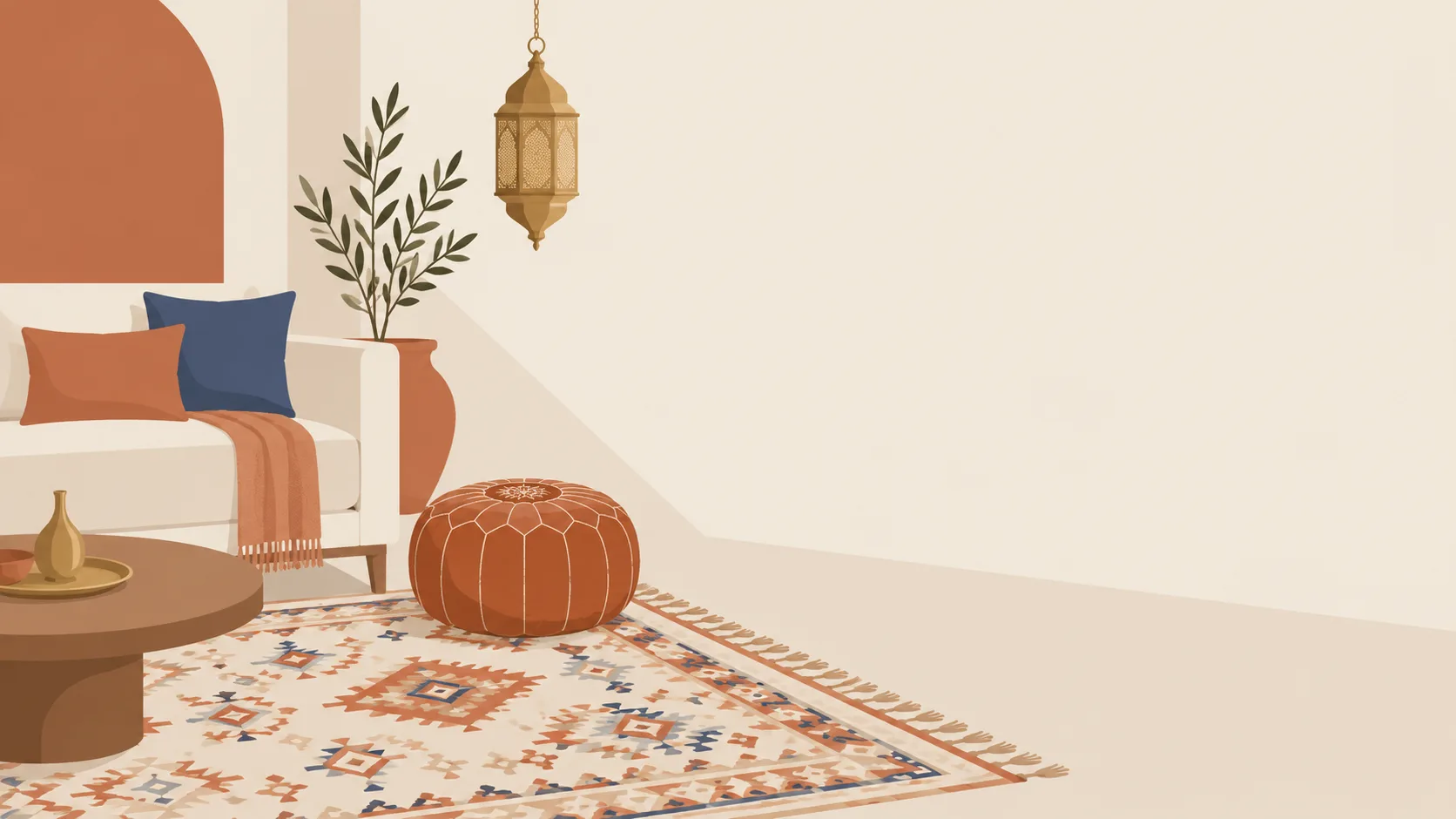
A neutral pouf — tan, cognac, or off-white leather — blends easily into almost any room and works well if you already have other bold or patterned pieces, like a Moroccan rug or patterned cushions, since it won't compete with them. A statement color or embroidered pattern works best when the rest of the room is fairly neutral, letting the pouf act as the room's main pop of color.
Tying It to an Existing Accent Color
The easiest way to choose confidently is to match the pouf to a color that already exists somewhere else in the room — a cushion, a piece of art, a rug border — rather than picking a color in isolation. This creates a sense of intentional coordination instead of the pouf feeling like an unrelated addition.
A simple rule of thumb
- Busy room (patterned rug + patterned cushions): choose a neutral, solid-color pouf
- Neutral room: choose a pouf in a bold accent color or embroidered pattern
- Either way: repeat the pouf's color somewhere else in the room for cohesion
05. Step 4: Placement & Common Mistakes
Where Poufs Work Best
Poufs are most useful in spots that benefit from flexibility — next to an armchair as a footrest, tucked beside a sofa to pull out as extra seating, or in a reading nook as a low side table. Placing one in the middle of a walkway or a tight space it can't be moved out of easily defeats its main advantage, which is being lightweight and easy to reposition as needed.
Mistakes that leave a pouf unused
- Choosing a size too small to comfortably rest feet on, so it never gets used as intended
- Picking a delicate fabric for a high-traffic spot where it'll wear out quickly
- Buying a color that doesn't relate to anything else in the room
- Placing it somewhere it blocks natural walking paths instead of tucked to the side
06. Conclusion
The right Moroccan pouf isn't just about finding one that looks good in a photo — it's about choosing a material, size, and color that match how you'll actually use it in your space. Start with its job (footrest, extra seating, or accent piece), then let that decision guide the size and material, and tie the color back to something already in the room for a finished, intentional look.