










01. How to Choose the Right Moroccan Pouf for Your Space
Introduction
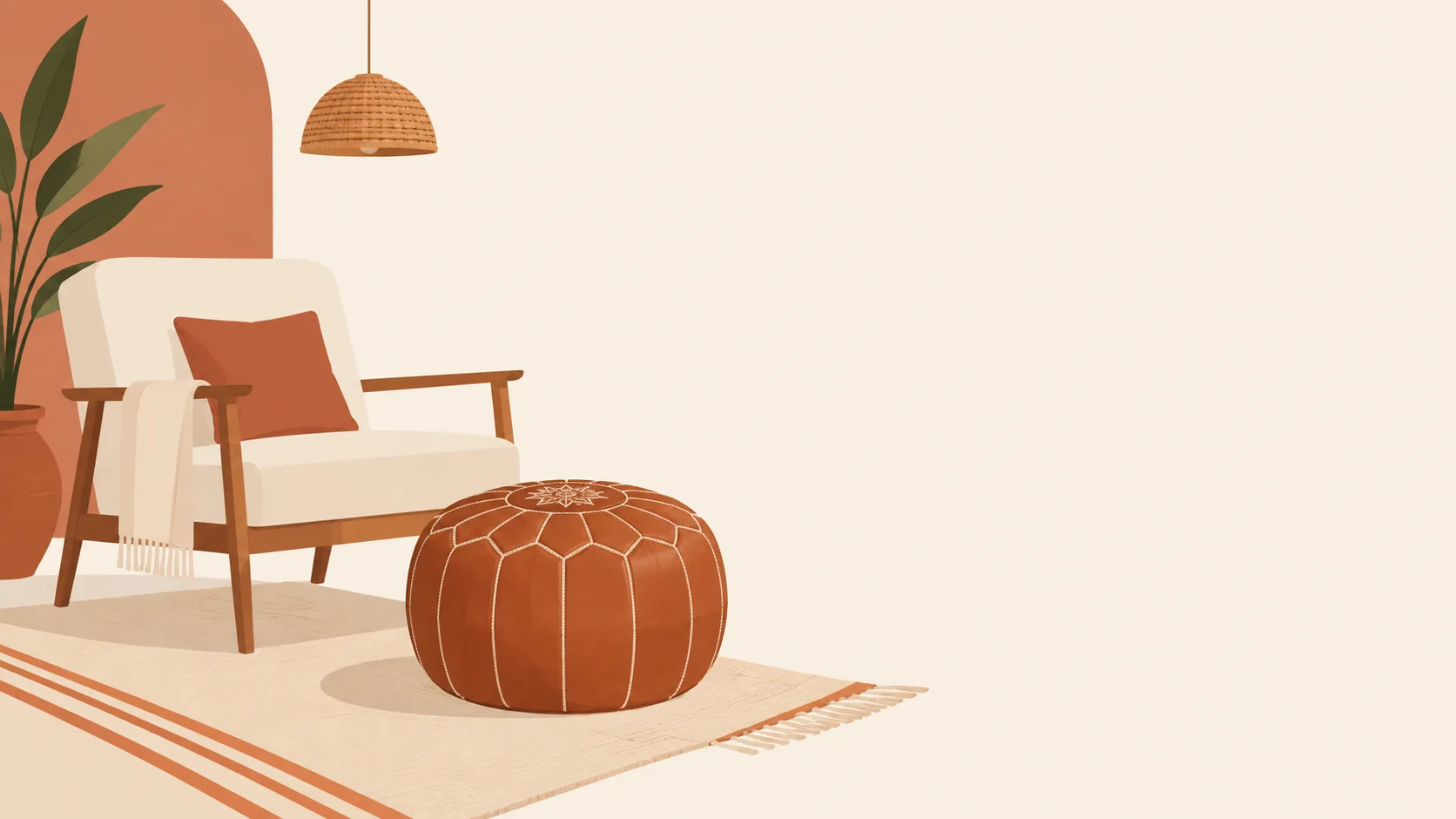
The Moroccan pouf is one of the most versatile pieces you can add to a room — it works as extra seating, a footrest, a side table for drinks, or simply a soft touch of texture and color. But with so many sizes, materials, and shapes available, it's easy to end up with a piece that looks great in the photo but doesn't suit how you actually use it.
This guide spells out exactly what to consider before buying — material, size, shape, color, and placement — so the pouf you choose earns its place in the room instead of becoming clutter.
02. Step 1: Choose the Right Material
Genuine Leather vs. Faux Leather
A genuine leather pouf is the traditional choice — it develops a distinctive natural patina over time, looks durable, and often lasts for years with minimal care. Faux leather offers a similar look at a lower price and can be a practical option for households with pets or children, since it's generally easier to wipe clean, though it doesn't age or soften the way genuine leather does.
Fabric and Embroidered Poufs
A fabric pouf — often cotton or wool with embroidered patterns — brings in more color and pattern than leather typically does, making it a good choice if you want the pouf itself to be a bold visual accent rather than a subtle one. It shows wear and stains more easily than leather, so it suits lower-traffic spots like a bedroom corner better than a busy living room.
Matching the Material to How You Use It
- Busy living room, often used as a footrest: genuine or faux leather for durability
- Low-traffic decorative spot, for display only: embroidered fabric for more color and texture
- Homes with children or pets: faux leather for easy cleaning
03. Step 2: Get the Size and Shape Right
Choosing a Size Based on Its Actual Function
The ideal pouf size depends a lot on what you want it to do. As a footrest for an armchair, a diameter of 14–16 inches at a comfortable height is usually right. As extra seating or a small side table for drinks, a slightly taller pouf with a diameter of 18–20 inches is a better fit, since it needs to work more as a small seat than as a footrest.
Round vs. Cylindrical Shape
A slightly flattened round pouf is the most traditional Moroccan shape, and it looks softer and more casual in a room. A taller cylindrical pouf looks more contemporary and can serve as a side table more convincingly, since its flatter top surface holds a tray or drink more steadily.
Quick Size Guide
- Footrest with an armchair: 14–16 inch diameter, lower height
- Extra seat or side table: 18–20 inch diameter, taller cylindrical shape
- Small apartment or tight corner: a smaller round pouf (12–14 inches) to avoid crowding the space
04. Step 3: Pick a Color That Works with Your Room
Neutral vs. Bold Colors
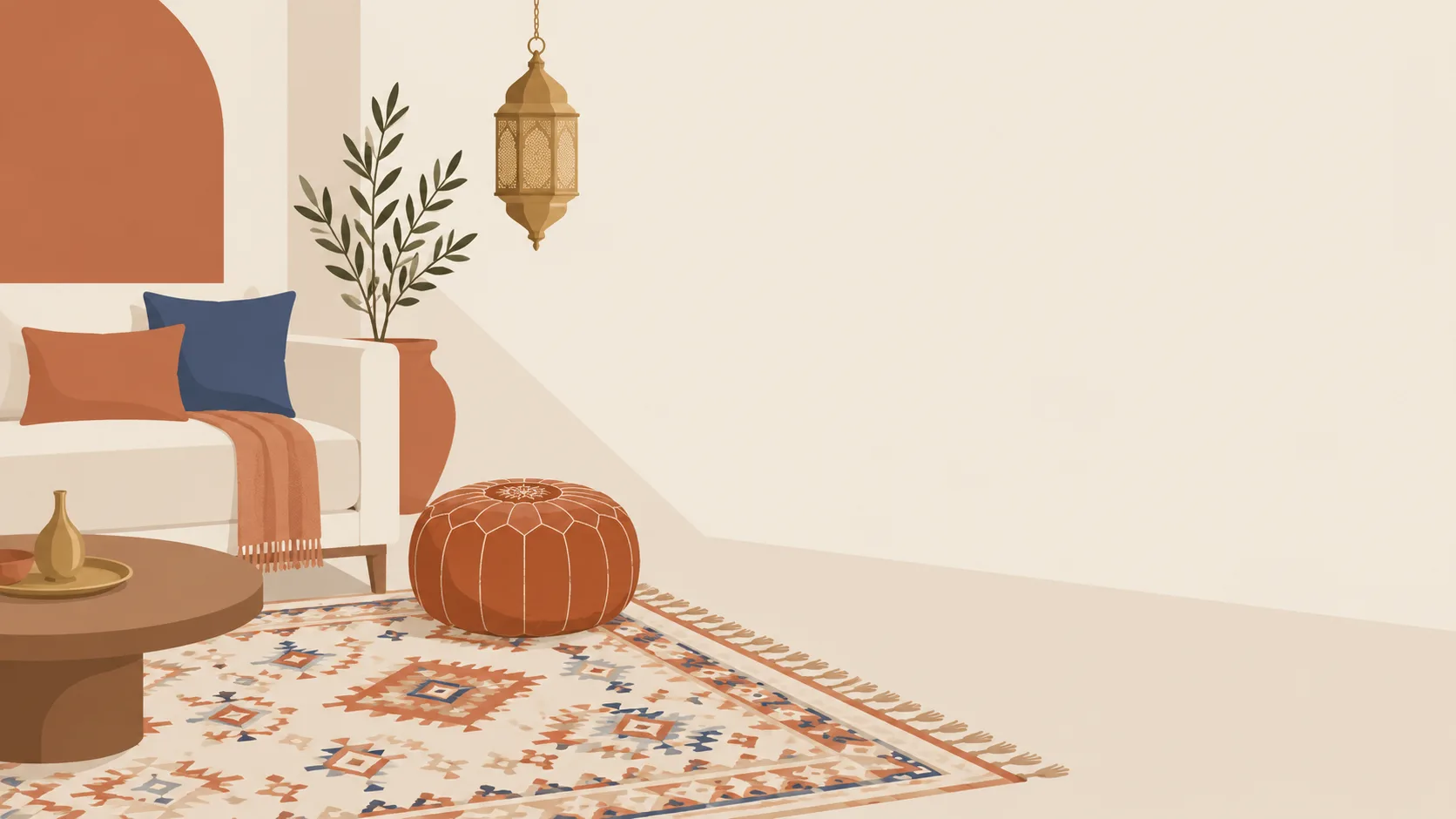
A neutral pouf — light brown, cognac, or off-white leather — blends easily into almost any room and works well if you already have other bold or patterned pieces, such as a Moroccan rug or patterned cushions, because it doesn't compete with them. A bold color or embroidered pattern works better when the rest of the room is relatively neutral, so the pouf becomes the room's main touch of color.
Tie It to an Existing Accent Color
The easiest way to choose with confidence is to match the pouf to a color already present elsewhere in the room — a cushion, a piece of art, or a rug border — rather than choosing a color in isolation. This creates a sense of intentional coordination instead of making the pouf look like a disconnected add-on.
A Simple Practical Rule
- Busy room (patterned rug + patterned cushions): choose a neutral, single-color pouf
- Neutral room: choose a pouf in a bold accent color or an embroidered pattern
- Either way: repeat the pouf's color elsewhere in the room for harmony
05. Step 4: Placement and Common Mistakes
Where a Pouf Works Best
A pouf is most useful in spots that benefit from flexibility — next to an armchair as a footrest, tucked beside a sofa to be pulled out as extra seating, or in a reading nook as a low side table. Placing it in the middle of a walkway or in a tight spot it can't easily be moved from wastes its main advantage, which is its light weight and how easily it can be repositioned when needed.
Mistakes That Leave a Pouf Unused
- Choosing a size too small to rest your feet on, so it never gets used as intended
- Choosing a thin fabric for a high-traffic spot where it will wear out quickly
- Buying a color that doesn't connect to anything else in the room
- Placing it where it obstructs natural walking paths instead of keeping it off to the side
06. Conclusion
Choosing the right Moroccan pouf isn't just about finding a piece that looks good in a photo — it's about picking a material, size, and color that fit how you'll actually use it in your space. Start with its function (footrest, extra seat, or decorative piece), then let that decision guide the size and material, and tie the color to something already in the room for a complete, intentional look.