












01. How to Mix Moroccan Decor with a Modern Minimalist Home
Introduction
Moroccan decor and modern minimalism seem like opposites at first glance — one is rich in pattern, color, and texture, the other defined by restraint and clean lines. But when balanced well, they create a warm, intentional space that feels neither bare nor empty, which is exactly why this blend has become one of the most popular interior styling approaches right now.
The key isn't choosing between the two styles — it's knowing which Moroccan elements to bring in, how many, and how your minimalist foundation gives them room to stand out. This guide explains exactly how, room by room and piece by piece.
02. Step 1: Start with a Neutral, Minimalist Foundation
Why the Foundation Matters More Than Anything
Moroccan pieces are bold by nature — rich colors, intricate patterns, and warm materials like brass and wool. If your walls, furniture, and floors are already busy, adding Moroccan decor on top creates visual competition instead of harmony. A neutral foundation — white or light walls, simple-lined furniture, and an uncluttered layout — gives each Moroccan piece room to actually be seen and appreciated.
What a "Minimalist Foundation" Means in Practice
- Solid-color or lightly textured walls, avoiding busy wallpaper
- Furniture with clean, simple lines rather than ornate detailing
- Limited color palette (2–3 core neutrals) before adding accents
- Open floor space — resist the urge to fill every corner
Treat Moroccan Pieces as an Accent, Not a Backdrop
The most common mistake is trying to make the entire room "Moroccan" all at once. Instead, treat your minimalist base as a canvas and choose a few Moroccan pieces to be the focal points — this restraint is what keeps the space modern rather than a themed decor scheme.
03. Step 2: Choose One Statement Piece per Room
Why One Piece Works Better Than Several
A single, carefully chosen statement piece — a hand-woven rug, a large brass lantern, or a carved wooden mirror — draws the eye and does visual work that five small pieces together can't do as effectively. Piling many bold pieces into one room makes them compete for attention and can shift the space from "curated" to "cluttered," even if each piece is beautiful on its own.
Strong Statement Piece Options by Room
- Living room: A large Beni Ourain or Boujad rug to anchor the seating area
- Bedroom: A large brass or wrought-iron lantern as a bedside accent
- Entryway: A carved wooden mirror or a single patterned runner for the entry table
- Dining area: A set of ceramic serving dishes with Moroccan patterns as the table's focal point
Let the Room's Function Guide the Choice
The right statement piece often depends on how the room is used, not just how it looks on its own. A rug suits a living room because it's underfoot and sets the tone for everything above it, while a lantern works best somewhere it will actually be used after dark, such as a bedroom or reading nook.
04. Step 3: Add Texture Before Adding More Pattern
Texture Does More Than People Expect
After placing your statement piece, the next layer to add is texture, not more pattern. A wool pouf, a woven basket, a hammered brass tray, or a leather cushion all bring in the warmth and craftsmanship associated with Moroccan style, without introducing competing colors or motifs that fight with your statement piece.
Easy Texture Layers to Start With
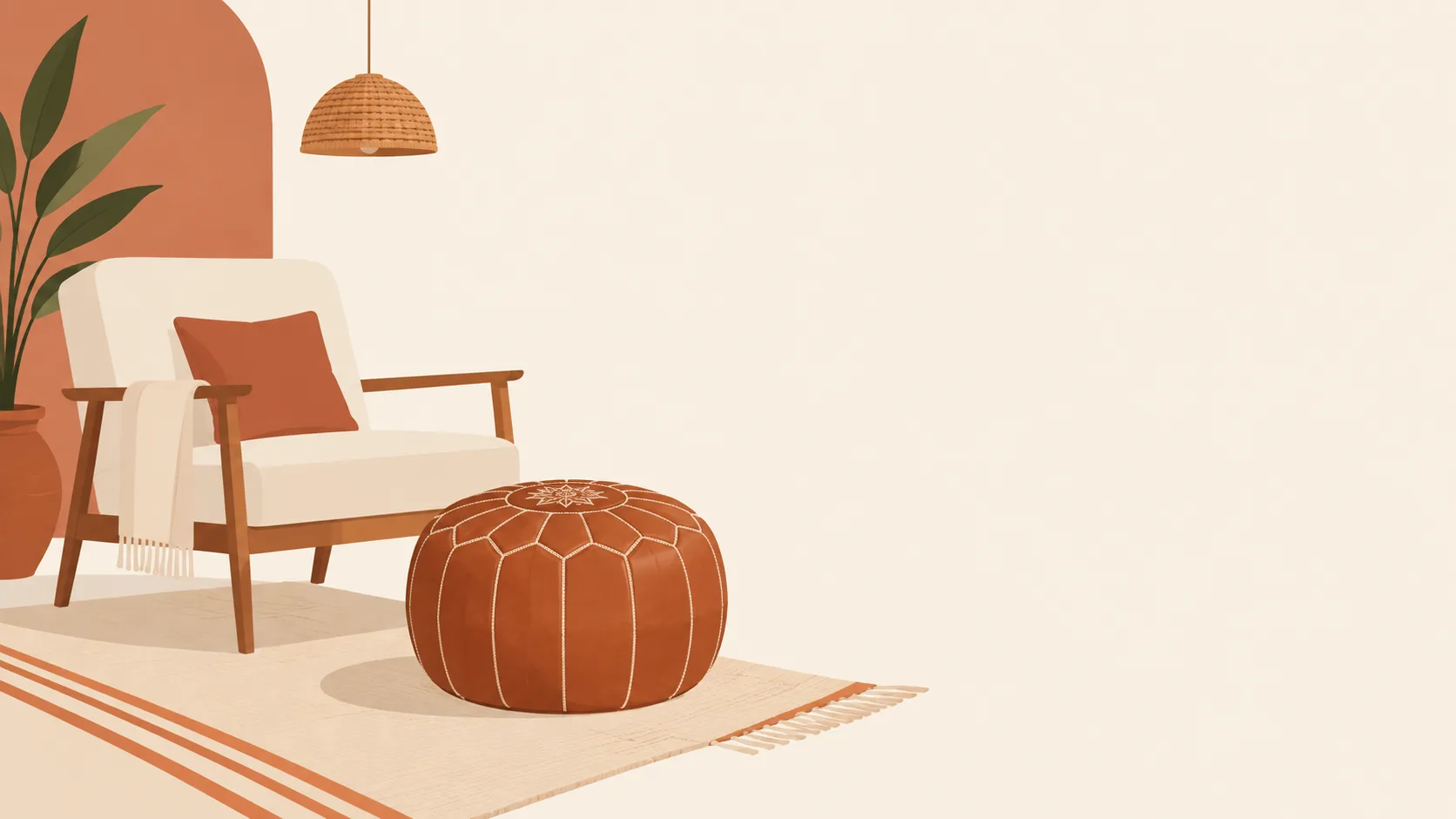
- A leather or wool pouf near a sofa or reading chair
- Woven baskets used for storage or as a plant stand
- A hammered brass or copper tray on a coffee table
- A chunky knit or wool throw folded over a neutral sofa
When (and How) to Add a Second Pattern
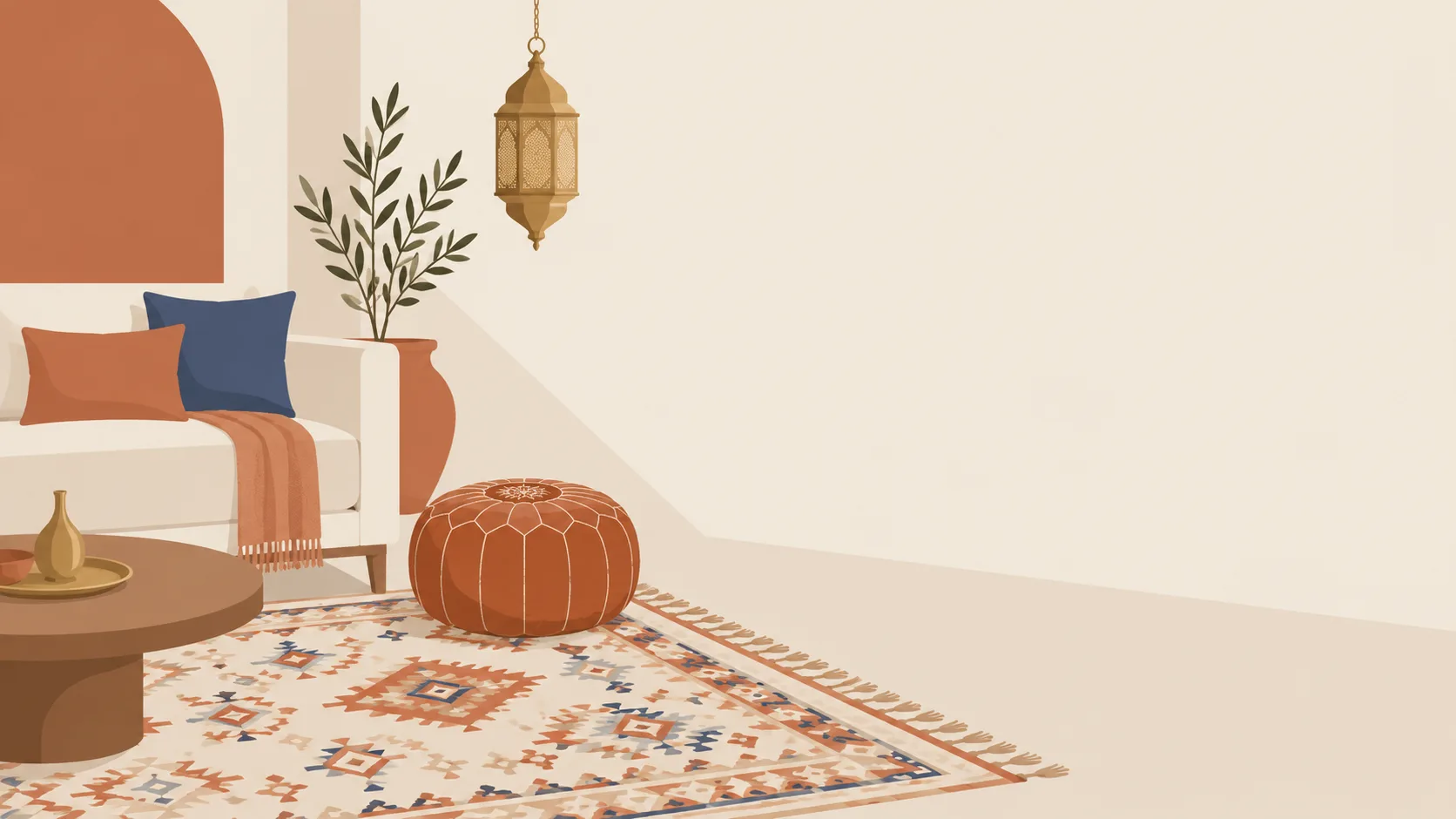
If you do want to add a second pattern — such as a set of patterned cushions next to a patterned rug — keep the color palette cohesive so the two patterns don't clash. The easiest way: choose cushions that repeat one or two colors already in the rug, rather than introducing a completely new color family.
05. Step 4: Tune the Color Palette and Lighting
Choosing a Palette That Bridges Both Styles
Moroccan decor is often defined by deep terracotta, saffron, indigo, and emerald shades, while modern minimalism relies on white, warm neutrals, and touches of black. The bridge between them is usually two Moroccan-inspired colors that repeat deliberately throughout the room — in a cushion, a rug border, or a piece of pottery — rather than being scattered randomly across every surface.
A Color Palette That Suits Most Rooms
- Base: Walls and large furniture in white, off-white, or light warm gray
- Neutral accents: Black or dark wood for contrast (frames, lighting fixtures)
- Moroccan accent color: One dominant shade (terracotta, indigo, or ochre) repeated 2–3 times in the room
Lighting Sets the Mood
Lighting is often overlooked, but it's one of the fastest ways to shift a room's mood toward Moroccan warmth. Perforated brass or metal lanterns cast intricate shadow patterns across walls and ceilings when lit, adding depth and warmth after dark that a purely minimalist room often lacks — and even a single lantern-style lamp can do this.
06. Common Mistakes to Avoid
What Throws Off the Balance Most
- Using too many statement pieces in one room, creating visual competition
- Mixing several bold patterns without a shared color thread
- Skipping texture layers and jumping straight from neutral to bold pattern
- Choosing decor for the theme alone, without considering the room's actual function
07. Conclusion
The most successful modern Moroccan spaces aren't the ones with the most Moroccan pieces — they're the ones built on restraint, letting a neutral, minimalist foundation give a handful of carefully chosen pieces room to breathe. Start with one statement piece, add texture before pattern, and tie everything together with a repeated accent color, and the result will look intentional rather than like two styles competing for space.