









01. How to Measure Blood Sugar at Home: A Guide to Using a Glucose Meter and Understanding Results
Introduction
Monitoring blood sugar is important for people with diabetes, as it helps them understand changes in their sugar levels and track how food, physical activity, and treatment affect their readings.
With the availability of home glucose meters, it has become possible to measure easily and record results to share with the doctor.
In this guide, we will learn how to use a glucose meter step by step, the right times to measure, how to understand results, and the most important mistakes to avoid for more accurate readings.
02. Why Is It Important to Measure Blood Sugar at Home?
Benefits of Tracking Blood Sugar Readings Regularly
How Does Tracking Blood Sugar Help You?
Tracking your blood sugar helps you:
Understand how meals and physical activity affect your readings.
Track changes in your blood sugar over time.
Notice high or low readings and report them to your doctor.
Evaluate how effective your treatment plan is in cooperation with your doctor.
Keep a clear record that helps in making appropriate medical decisions.
Remember that the number of times you measure varies depending on the type of diabetes, treatment, and health condition, so follow the schedule your doctor sets for you.
03. When Should You Measure Blood Sugar?
Common Times to Measure Blood Sugar
When Can You Perform a Blood Sugar Test?
Depending on your health condition and your doctor's guidance, you may need to measure your blood sugar at the following times:
Fasting: usually after not eating for at least 8 hours, if your doctor requests it.
Before meals: to know your blood sugar level before eating.
After meals: often one to two hours after starting to eat, according to the plan your doctor has set.
Before bed: to track your blood sugar level during the evening.
When unusual symptoms appear: such as sweating, shaking, or dizziness, according to your medical follow-up plan.
It is not necessary to perform all of these measurements daily for every person; the number and timing of tests depend on the treatment and type of diabetes.
04. How to Prepare for Measuring Blood Sugar at Home
05. How to Use a Glucose Meter Step by Step
Steps to Measure Blood Sugar at Home Correctly
Follow these steps when using a home glucose meter:
Wash your hands: wash your hands with soap and water and dry them well.
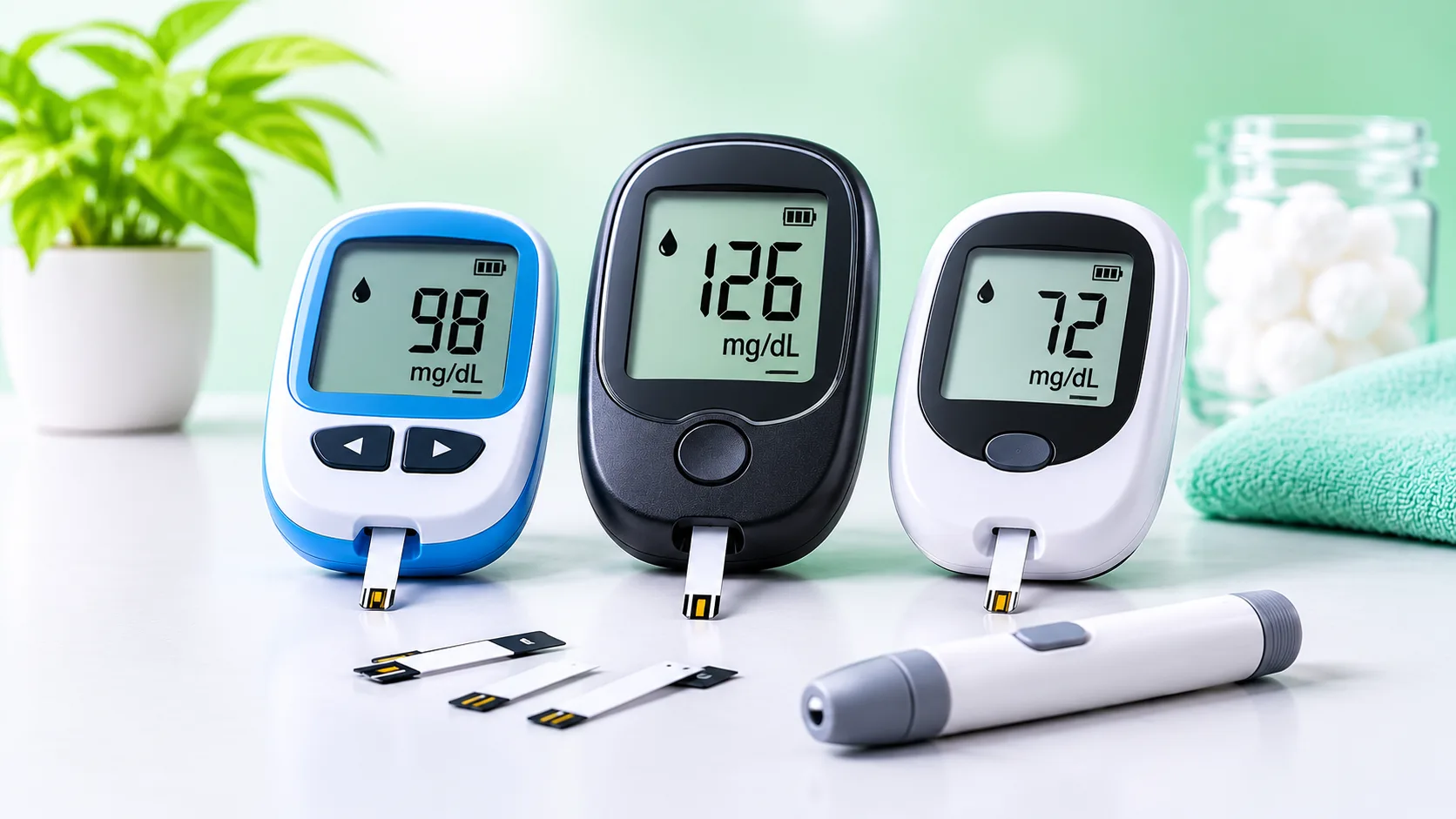
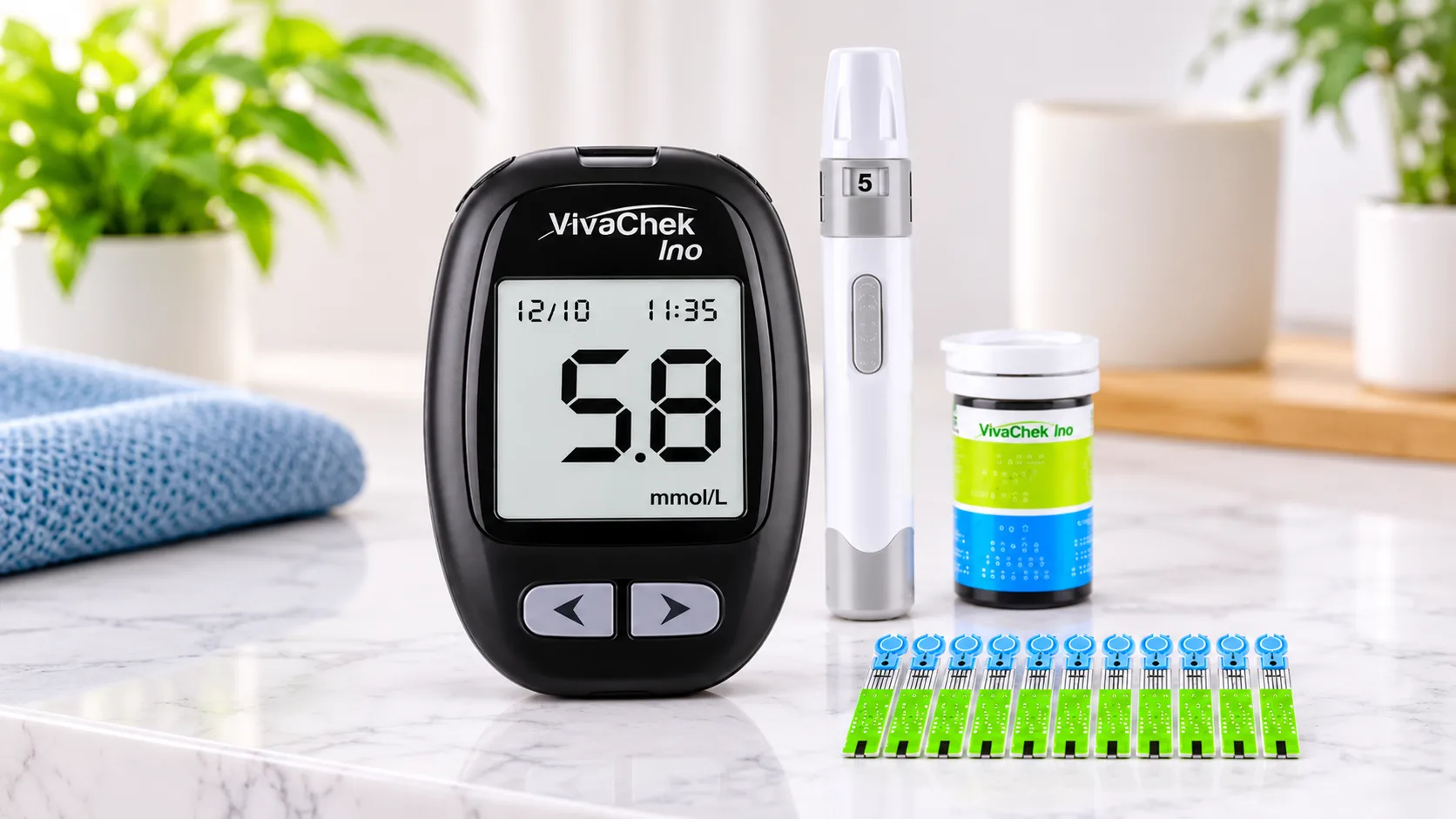
Prepare the device: make sure the meter, test strips, and lancing device are available.
Insert the test strip: place it in the device in the way described in the user manual.
Prepare the lancing device: use a new, clean lancet according to the device instructions.
Take the blood sample: prick the side of your fingertip to get a suitable drop of blood.
Place the blood on the strip: follow the manufacturer's instructions for applying the sample.
Wait for the result: read the number shown on the screen and record it with the date and time of measurement.
Dispose of the lancet safely: place the used lancet in a designated sharps container.
Important note: Do not share the lancing device or lancets with anyone else, even if the lancet has been changed, and always follow the instructions of your device and test strips.
06. Blood Glucose Meter and Home Testing Supplies
07. How to Understand the Numbers Shown on a Glucose Meter
Understanding Blood Sugar Results and Target Ranges
What Does a Blood Sugar Result Mean?
A blood sugar result usually appears in mg/dL or mmol/L, and appropriate targets vary depending on health condition, age, type of diabetes, and the treatment used.
For many non-pregnant adults with diabetes, the American Diabetes Association lists the following common targets:
Before meals: 80 to 130 mg/dL.
One to two hours after the start of a meal: less than 180 mg/dL.
These are general targets and are not suitable for everyone. Your doctor may set different targets depending on your health condition.
Do not rely on a single reading to diagnose diabetes; diagnosis requires appropriate medical tests and evaluation by a specialist.
08. Common Mistakes When Measuring Blood Sugar at Home
Mistakes to Avoid When Measuring Blood Sugar at Home
How to Get a More Accurate Reading
Avoid the following mistakes when using a glucose meter:
Not washing your hands: food or sugar residue can affect the result.
Using unsuitable strips: make sure the strips are compatible with your device.
Using expired strips: always check the expiration date.
Not storing strips correctly: follow the manufacturer's instructions.
Using a used lancet: use a new lancet for each test.
Not following the device instructions: adhere to the method of taking the sample and applying it to the strip.
If the result is unexpected or does not match how you feel, retest after making sure you followed the instructions, and contact your doctor if needed.
09. When Should You Consult a Doctor About Blood Sugar Results?
When Do Blood Sugar Readings Require Medical Follow-Up?
It is important to contact your doctor if you notice repeated high or low readings, or if the results differ unusually from your previous readings.
Pay particular attention to the following cases:
Repeated blood sugar below 70 mg/dL.
Persistent blood sugar above the targets set by your doctor.
Appearance of symptoms such as sweating, shaking, dizziness, or confusion.
Low blood sugar not improving despite following the prescribed treatment plan.
Emergency case: If severe symptoms appear such as loss of consciousness, seizures, or inability to swallow, do not give the person food or drink by mouth, and call emergency services immediately.
Do not change medication doses or stop treatment based on device readings without consulting your doctor.
Track Your Blood Sugar Easily from Home
Discover the VivaChek Ino Glucose Meter
Are you looking for a home device to monitor your blood sugar?
Discover VivaChek Ino, a digital glucose meter designed to help you perform home tests and record results to track with your doctor.
Explore the device details, how to use it, and what it includes before ordering.
Frequently Asked Questions About Measuring Blood Sugar at Home
Answers to the Most Common Questions
1. Can blood sugar be measured at home without visiting a doctor?
Yes, a glucose meter can be used to track readings at home, but it does not replace medical examinations and diagnosis by a doctor.
2. Should hands be washed before measuring?
Yes, wash your hands with soap and water and dry them well before testing to avoid food residue affecting the result.
3. Can a test strip be used more than once?
No, a new test strip must be used for each measurement.
4. Is the normal blood sugar range the same for everyone?
No, targets vary depending on health condition, age, type of diabetes, and treatment.
5. Can the lancing device be shared with another person?
Do not share the lancing device or lancets with others, even when changing the lancet, to avoid transmission of infection.
Medical sources: